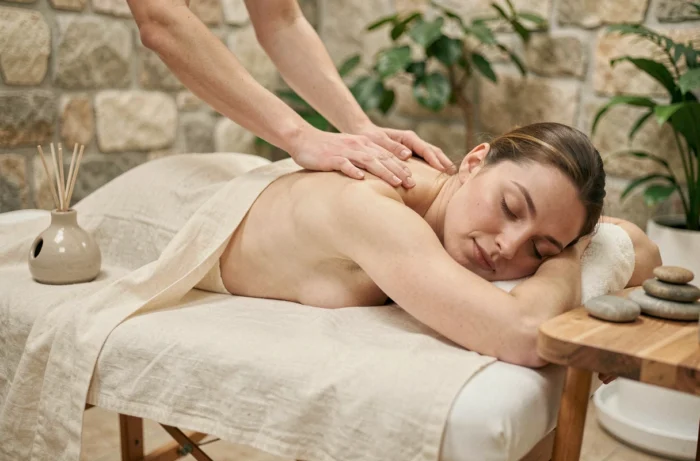
California massage, Hawaiian lomi-lomi, and hot stone massage share a common intention: to lower muscle tone through slow and enveloping maneuvers. Their grouping under the label “gentle massage” masks notable differences in protocol, pressure, and contraindications.
Pressure and execution speed: what truly defines a gentle massage
A massage described as gentle is not limited to light pressure. It is primarily the speed of execution of the maneuvers that determines the sedative effect on the nervous system. A slow stroke, even with moderate pressure, promotes a sense of comfort and release.
The California massage uses long, fluid movements that cover the entire body without breaking contact. The practitioner maintains a steady rhythm, often mirroring the recipient’s breathing. The lomi-lomi, on the other hand, introduces forearm and elbow passages with a wider amplitude, which can be surprising: the pressure is not always low, but the continuity of the gesture retains the enveloping effect.
The hot stone massage relies on a different mechanism. The heat from the basalt stones causes local vasodilation that relaxes muscle fibers even before the practitioner applies manual pressure. It is this thermal preparation that allows this treatment to be classified among gentle protocols, even though the temperature of the stones requires constant vigilance.
For those who wish to delve deeper into the distinctions between these approaches, it is useful to learn more on Acte Santé before choosing a protocol that suits their expectations.
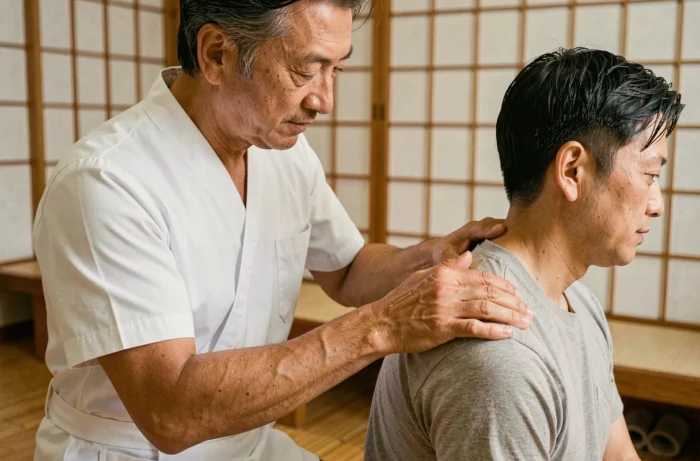
California massage or lomi-lomi: criteria for choosing deep relaxation
The California massage favors a superficial to moderately deep touch. Strokes and light kneading follow in a predictable sequence. This regularity suits those seeking a release without intense bodily stimulation.
The lomi-lomi requires a higher tolerance for firm contact. The forearm passages generate pressure that can reach an intermediate level, especially on the back and thigh areas. In contrast, the amplitude of the movements and the absence of pauses between sequences maintain a continuous state of relaxation.
Recipient profiles suited to each protocol
- The California massage is suitable for individuals sensitive to pressure, those prone to chronic stress, or first-time recipients of wellness massage
- The lomi-lomi is aimed at those who appreciate a more encompassing bodywork experience, with sensations of rocking and passive limb mobilization
- The hot stone massage is relevant when muscle tensions are diffuse and heat provides relief, but it is not recommended on an inflammatory area, a wound, or a recent surgical site
We recommend specifying the desired level of pressure to the practitioner at the beginning of the session. A so-called gentle protocol remains adjustable, and real-time adaptation is a marker of the practitioner’s competence.
Contraindications and legal framework of relaxation massage in France
A massage presented as gentle is not automatically risk-free. Clinical recommendations advise against massage on an acute injury, a suspected fracture, or in the case of anticoagulant treatment. Severe osteoporosis or suspicion of thrombosis requires prior medical advice.
Legally, the boundary between relaxation and therapeutic act is crucial. Since the ruling of the Court of Cassation on June 29, 2021, a wellness massage can be practiced outside the field of physiotherapy as long as no therapeutic purpose is claimed. The practitioner must not promise to treat pain or circulatory disorders.
Check the practitioner’s qualifications
Wellness massage is not a regulated profession in France. No state diploma is required to practice. Certifications registered with the RNCP serve as a reference, but they are not all equivalent and do not confer the status of health professional.
Aesthetic comfort modeling falls under the Code of Crafts and must be performed by a qualified person or under the effective and permanent control of a qualified person. Before booking a gentle massage session, ensuring that the practitioner clearly distinguishes their relaxation offer from a medical treatment remains the most reliable precaution.
Session duration and frequency for an effective relaxation protocol
The duration of the session directly influences the depth of relaxation achieved. A California protocol that is too short does not allow the parasympathetic nervous system to take over. A sufficiently long session allows the body to surpass the initial adaptation phase and enter a more stable state of relaxation.
The regularity of sessions matters more than their individual duration. A one-off gentle massage provides temporary relief from stress. A regular rhythm, adapted to individual constraints, prolongs the benefits on sleep quality and the reduction of accumulated muscle tensions.
Adapting the protocol according to the context
In spas, gentle massage protocols often integrate a sensory welcome time (sound ambiance, diffusion of essential oils) that contributes to the overall relaxation experience. In independent practices, the environment is more sober, but the treatment can be more personalized.
The choice between these two settings depends on the objective: an immersive experience oriented towards release in a spa, or targeted work on specific tension areas in a practice. In both cases, communication with the practitioner before and during the session remains the factor that determines the quality of the care received.