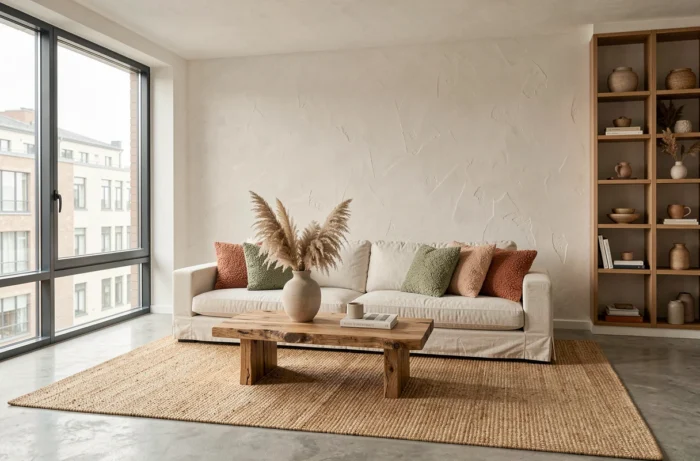
Your living room feels stagnant after several seasons, and changing the color of a wall or adding a cushion is no longer enough. The decor trends of 2024 are not just about a color palette or a dominant style. They reflect a deeper change in how we choose our furniture, materials, and even the lifespan of the objects that make up your interior.
Reuse and refurbished furniture: the decor trend that no one lists
Competitors talk about organic shapes, chrome, and maximalism. None mention what is truly transforming the furniture market in 2024: reuse is becoming a real criterion for design.
Since 2024, purchasing centers like Resah have integrated reused furniture into framework agreements that include consulting, delivery, and installation. Refurbished furniture is moving out of the informal circuit into a structured logic, with guarantees and follow-up. Meanwhile, several recycling centers now offer restored furniture by artisans, with meticulous finishes that rival new items.
You can find inspiration to combine these approaches with the latest trends on the Tendances Déco website, which lists concrete ideas for updating your interior.
Specifically, choosing a buffet or a table made of refurbished solid wood allows you to obtain a piece with character, often in species that are not easily found new (antique oak, patinated walnut). The resulting vintage style fits well in both maximalist decor and minimalist Japanese interiors.
Natural materials and sustainability: what the European ESPR regulation changes
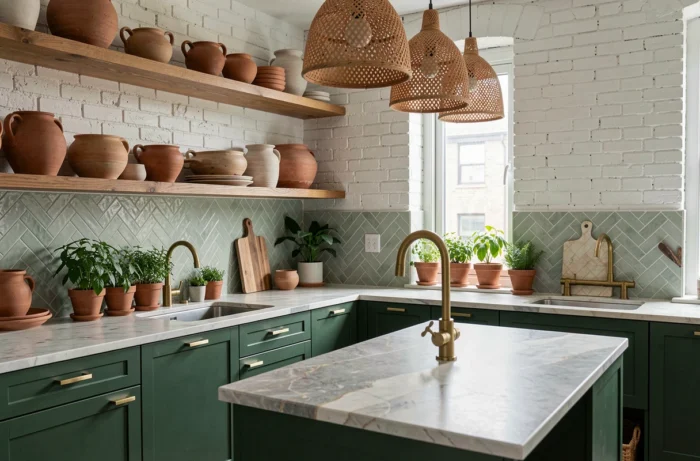
2024 decor articles mention wood, linen, stone. They forget to explain why these materials will impose themselves sustainably, beyond fashion.
The European ESPR regulation (EU 2024/1781), which came into effect on July 18, 2024, places furniture among the priority categories that may be subject to sustainability, reparability, and traceability requirements. A digital product passport is planned in the European work plan 2025-2030. This means that in a few years, furniture sold in Europe will need to clearly display its composition, estimated lifespan, and repairability.
For your interior decoration, the consequence is direct: furniture made of solid natural materials (solid wood, stone, forged metal) gains value compared to melamine particle boards, which are more difficult to repair and recycle.
How to choose sustainable materials for your space
Are you hesitating between a low-cost particle board piece and a more expensive solid wood item? Ask yourself about reparability. A scratched oak tabletop can be sanded and oiled. A chipped melamine tabletop is thrown away.
- Solid wood (oak, beech, ash) is easy to restore and ages well, making it a coherent choice with sustainable decor trends.
- Metal (steel, brass, wrought iron) supports repairs and transformations: a table leg can be repainted, welded, or adapted.
- Natural stone (marble, travertine, slate) withstands daily wear and provides a texture that ceramic imitations do not fully replicate.
Colors and rounded shapes: how to integrate them without remodeling the entire house
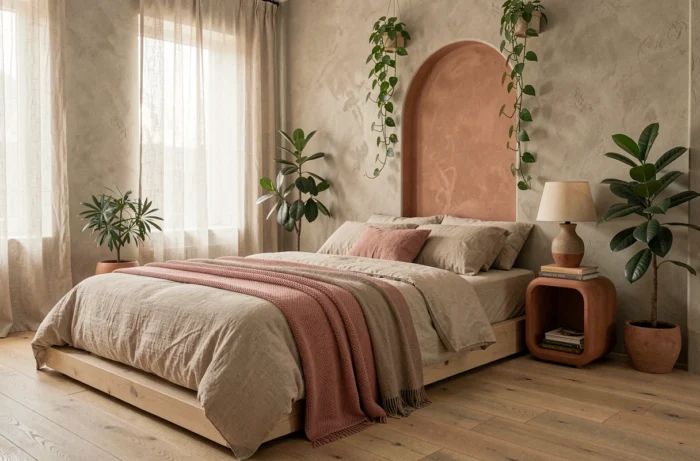
Vivid palettes (fuchsia pink, Klein blue, burnt orange) and furniture with organic curves dominate the 2024 catalogs. The trap would be to change everything at once. Starting with just one piece of furniture or one colored wall is enough to transform a space.
Have you noticed how a rounded armchair changes the perception of a rectangular living room? Curved shapes break the rigidity of straight lines and create a sense of visual comfort, even in a small space. A round pouf, an oval mirror, or a coffee table with rounded edges are enough to introduce this trend.
Vibrant colors without bad taste
Color blocking (an entire wall in a bold shade) works well in bright living spaces. In a bedroom or narrow hallway, prefer touches of color on accessories: cushions, vases, frames. One colorful object in a neutral room draws the eye and structures the decor.
Earthy tones (terracotta, ochre, sage green) remain a safe bet for those who prefer a more soothing atmosphere. They naturally pair with wood and stone, two materials that dominate the 2024 material trends.
Lifestyle and interior layout: think about usage before style
Japandi (a blend of Japanese minimalism and Scandinavian design) and granny chic (retro furniture, doilies, floral patterns) coexist in magazines. These two styles share the same principle: the layout should reflect your way of living, not a catalog.
Before choosing a decor style, identify your true needs. Here are some useful questions:
- How much time do you actually spend in your living room? If you work there, an integrated desk matters more than a spectacular sofa.
- Do you need visible or hidden storage? Maximalism embraces open shelves filled with objects. Minimalism prefers closed cabinets.
- Does your interior accommodate children or pets? Fragile materials (light velvet, untreated marble) require maintenance that not everyone is willing to undertake.
- What budget are you willing to allocate to durable pieces rather than frequently replacing entry-level furniture?
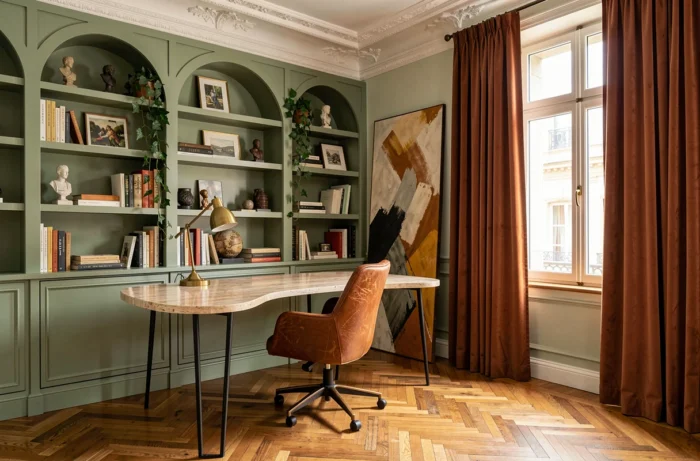
The most successful decor ideas in 2024 do not come from a single style applied everywhere. They arise from a thoughtful mix of solid furniture (new or refurbished), colors that resonate with you, and materials that you can keep for a long time. The best trend is the one that lasts beyond the season.