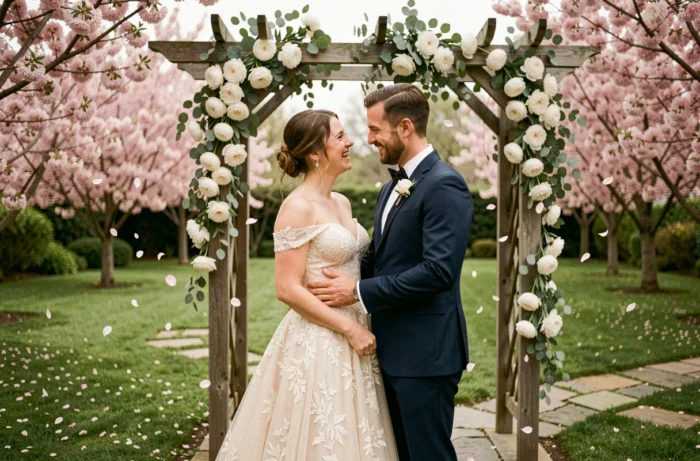
The season of a wedding is not just about aesthetic preference. It influences the budget, the availability of venues, the comfort of guests, and the technical feasibility of the ceremony. Choosing the best season for a wedding involves balancing logistical, regulatory, and financial constraints that general articles rarely address.
Noise regulations and outdoor receptions: the overlooked filter
Before even comparing the floral palettes of spring and autumn, we recommend checking a technical point often overlooked: municipal decrees on noise hours. The national noise disturbance period runs from 10 PM to 7 AM, but daytime thresholds vary from one municipality to another.
An isolated rural estate is not exempt from this constraint. If your outdoor secular ceremony includes sound systems and an orchestra, the permitted time slot depends on the local prefectural decree. A summer wedding that stretches until midnight in an open park can pose more problems than a winter reception in an enclosed hall.
This is a criterion for seasonal choice in its own right: in summer, windows remain open, sound travels further, and neighbor complaints increase. In winter, an enclosed hall naturally mitigates disturbances. To learn more on Actu Mariage, the link between season and practical constraints deserves to be studied from the venue scouting phase.
Availability of wedding venues: high season vs. off-season
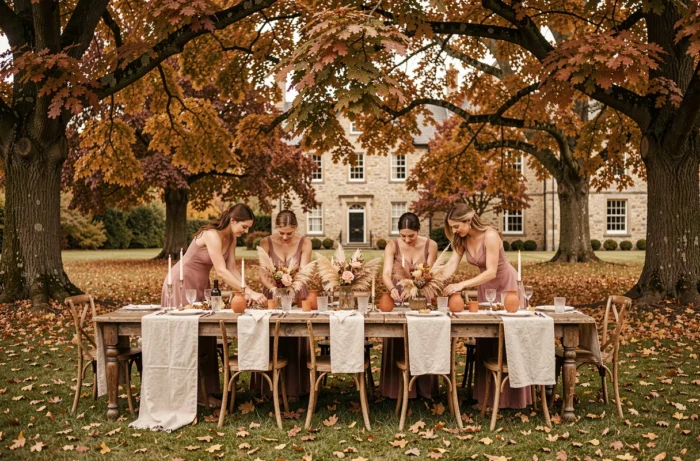
High season is not limited to the months of July and August. It actually covers the period from May to September, even early October in the south. The most sought-after estates, castles, and farms require a booking twelve to eighteen months in advance for a Saturday in peak season.
This timeframe is not just a logistical inconvenience. It significantly reduces the negotiating power over rates and included services. In the off-season (November to March), the balance of power shifts: more available slots, greater flexibility in space configuration.
Farms and barns: a structural seasonality
Some venues simply do not operate in winter. Rustic farms and barns are often only available between April and October due to lack of appropriate heating or sufficient insulation. A winter wedding in this type of setting can prove impossible, even if demand is lower.
We observe that this parameter sometimes eliminates the off-season even before the couple has decided between autumn ambiance and snowy decor. Checking the venue’s opening period before setting the date avoids weeks of unnecessary searching.
Wedding budget and season: real savings in the off-season
Autumn and winter are often presented as budgetary levers. Savings do exist, but they heavily depend on the format and chosen provider. A high-end caterer does not lower their rates just because one is getting married in November. On the other hand, the rental of the venue itself can show a significant discount outside of high season.
- The reception venue is the area where seasonality has the most impact: weekday or off-season rates are generally lower than those for a Saturday in June.
- Additional service providers (photographer, DJ, florist) are more available, which facilitates negotiation without necessarily guaranteeing a lower price.
- The choice of the day of the week can matter as much as the season: a Friday in September often costs less than a Saturday in May, with the constraint that some guests may work.
The off-season primarily reduces the cost of the venue and the pressure on the calendar, not the overall price of the wedding uniformly.
Wedding date in autumn or winter: deciding beyond the weather
The weather captures attention, but it is just one parameter among others. An autumn wedding in Provence often enjoys mild and sunny days, while a summer wedding in Brittany guarantees nothing. The region matters more than the season for reliable weather.
Seasonal ambiance and scenography
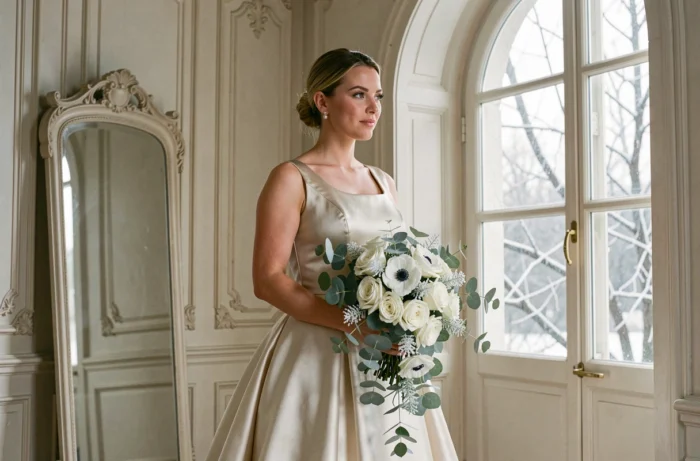
Autumn offers a natural color palette (golden foliage, low light) that simplifies the decorator’s work. Winter allows for intimate atmospheres, candles, fireplaces, heavy tablecloths, transforming a castle or estate into a warm setting.
Conversely, daylight decreases significantly: in December, natural light disappears around 5 PM. All photo scenography must be planned in advance, with a couple’s shoot scheduled in early afternoon rather than at sunset.
Guest comfort in winter
The question of comfort is not limited to heating the hall. Travel between the ceremony venue and the reception estate is more challenging on icy roads or in the rain. Older guests or those traveling from afar find it less easy to anticipate a winter weekend than a summer trip.
- Planning an indoor backup is not optional in autumn and winter: it is the main configuration.
- The cloakroom becomes a real logistical issue (coats, umbrellas) often underestimated in venues without dedicated space.
- On-site accommodation, when offered by the estate, reduces risks associated with nighttime travel in winter conditions.
Choosing the season for your wedding: the criteria that really matter
We recommend prioritizing the criteria in this order: availability of the desired venue, then regulatory compatibility (noise, outdoor capacity), then budget, and finally aesthetic preference. The ideal date is one that secures the venue and format, not one that corresponds to a mental image.
A successful wedding in January in a heated castle with thirty close guests is worth much more than a reception for two hundred people under an overheated marquee in August. The season is just a framework: it is the technical decisions made in advance that determine whether the event will meet the project’s expectations.