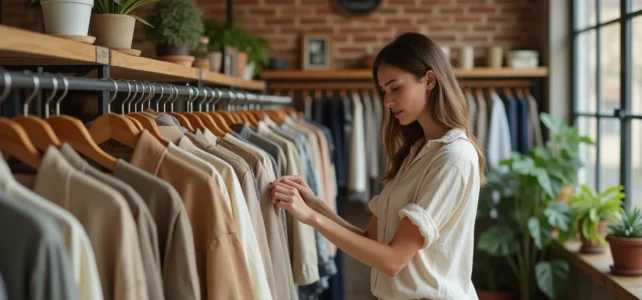
Sustainable fashion refers to a set of textile production and consumption practices aimed at reducing environmental impact and ensuring decent working conditions throughout the supply chain. Behind this definition lies a more heterogeneous audience than one might assume: buyers’ motivations are not limited to eco-friendly fibers, and their socio-economic profile has significantly evolved in recent years.
Purchasing power and second-hand: the economic driver of circular fashion
The image of the sustainable fashion consumer as a wealthy environmental activist deserves correction. A KPMG study conducted with the Circular Fashion Federation shows that reuse is primarily driven by pressure on purchasing power. Re-commerce (resale, consignment, second-hand platforms) attracts a growing share of financially constrained households, who are primarily looking to spend less on their clothing.
This shift changes the sociology of the movement. Advocates of circular fashion are no longer solely consumers convinced by environmental ethics. Many discover the ecological benefits afterward, once they have adopted second-hand for budgetary reasons. To better understand the profile of sustainable fashion advocates, it is essential to integrate this often underestimated economic dimension.
The degradation of the quality of new clothes from ultra fast fashion accelerates the phenomenon. Items that deform after a few washes push buyers, including young ones, towards better-made second-hand clothing. The calculation is simple: a second-hand wool coat lasts several seasons, whereas a cheap synthetic equivalent ends up in the trash within months.
Post-purchase experience: what sustainable consumers expect from brands
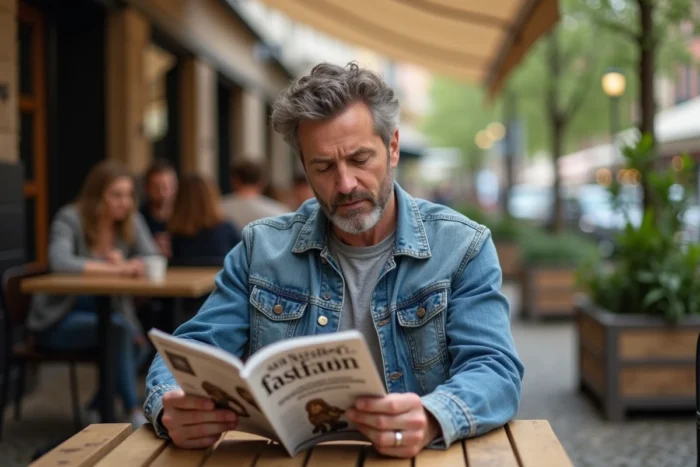
Buying an eco-responsible garment is no longer enough. According to the Post-Purchase Benchmark 2023, the vast majority of consumers claim to be more loyal to brands that offer a personalized post-purchase experience: simplified return management, repair services, take-back programs. This observation is particularly true for buyers sensitive to sustainability.
This expectation redefines what it means to “choose sustainable fashion.” The product remains central, but the surrounding services increasingly weigh in the purchasing decision. Specifically, advocates are looking for:
- Integrated or partner repair workshops capable of extending the life of a damaged garment rather than replacing it
- Take-back systems allowing the return of a used item in exchange for a discount on a future purchase, thus closing the textile cycle
- A transparent tracking of the order and its footprint, with information on the origin of materials and manufacturing conditions
Brands that invest in these services find that their customers return more regularly. Loyalty is built after the sale, not just in-store.
Repair and take-back as selection criteria
The fact that consumers are choosing between two brands based on textile after-sales service marks a structural change. Sustainability is no longer just a promise on the label. It is measured by a brand’s ability to support the garment throughout its entire lifespan.
European circular fashion market: projections attracting new profiles
The European circular fashion market is estimated to be around 100 billion euros by 2030, according to projections reported by KPMG and several specialized media. This figure attracts players who had no historical ties to responsible fashion: investment funds, technology platforms, logistics providers specializing in small parcels.
For consumers, this growth translates into a broader and more accessible offering. Collections made from recycled materials or organic fibers are no longer confined to a few niche brands. Mainstream retailers are developing dedicated lines, which mechanically expands the pool of advocates.
French regulatory framework and anti-fast fashion law
In France, the anti-fast fashion bill has helped to bring the issue to public attention. By defining “ultra-fast fashion” in law, the text has established a framework that encourages consumers to question their purchasing habits. However, the lack of strong sanctions in the adopted version limits the concrete impact on retailers’ practices.
Refashion, the eco-organization of the textile sector, is also subject to criticism. Some associations like Zero Waste France believe it points fingers at consumers while the primary responsibility lies with producers. This debate illustrates a recurring tension: advocates of sustainable fashion often act at their individual scale, lacking sufficient collective leverage.
Multiple motivations of ethical fashion consumers
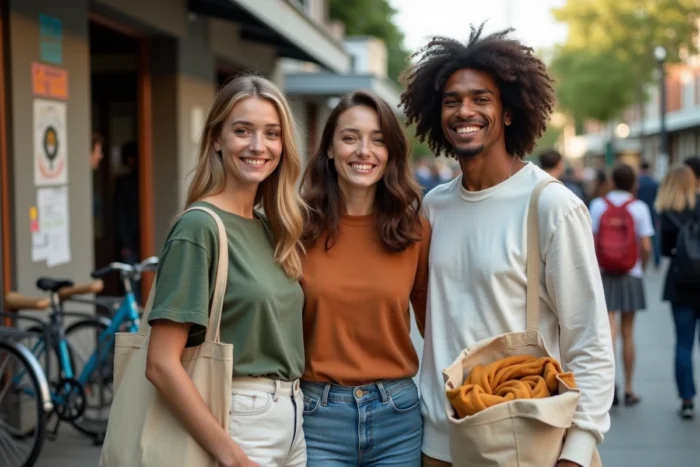
Reducing motivations to mere ecological awareness would be inaccurate. The reasons why consumers choose ethical fashion overlap and vary according to profiles:
- The search for quality and material durability, in the face of new clothes deemed increasingly fragile
- The desire to support decent production conditions, particularly after the media coverage of scandals in textile factories
- The wish to stand out from the accelerated cycle of disposable trends by building a more stable wardrobe
- Budget constraints, which make second-hand and re-commerce more attractive than low-cost new purchases
These motivations are not exclusive. The same buyer may combine economic concerns with environmental sensitivity. Sustainable fashion is not a monolithic block but a spectrum of practices and convictions.
The circular fashion market in Europe, regulatory pressure in France, and the evolution of post-purchase services converge towards the same effect: the audience for sustainable fashion is expanding, diversifying, and no longer corresponds to the stereotype of the consumer engaged by a single conviction. The next step will largely depend on brands’ ability to offer accessible prices on products whose traceability is verifiable, not just displayed.