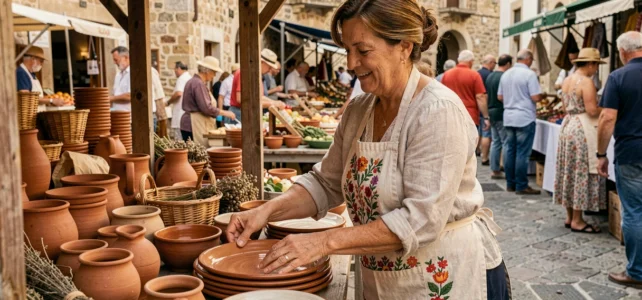
Porto Torres occupies a unique position on the north-west coast of Sardinia. An ancient Roman colony known as Turris Libisonis, the city retains a local commercial fabric where producers and artisans sell directly without intermediaries. The artisan markets in Porto Torres are not limited to a weekly gathering in a square: for the past two years, the municipality has been structuring a permanent offering that spills over onto the waterfront and the squares of the historic center.
Natural shopping centers in Porto Torres: a municipal policy behind the stalls
The municipality has implemented a strategy based on centri commerciali naturali (CCN), a system that brings together merchants, artisans, and public establishments around a defined geographical perimeter.
In 2026, Porto Torres became socio institutional of the CCN Lungomare, the second natural shopping center in the city after the CCN Botteghe Turritane. The municipality’s stated goal: to promote local commerce, public establishments, and traditional and artistic craftsmanship through events, performances, and promotional activities along the waterfront.
This dual structure means that the artisan offering no longer depends on a single market day. Those looking to explore the artisan markets in Porto Torres will find points of sale and activities spread between the historic center and the lungomare, according to a calendar managed by these two CCNs.
Summer events and craftsmanship on the lungomare of Porto Torres
The weekly market remains the foundation, but artisan activity has expanded to occasional events that blend gastronomy, craftsmanship, and live performances. In recent years, Porto Torres has developed a mixed event model where local product stands coexist with public entertainment.
Notte dei fuochi and summer carnival
The Notte dei fuochi, organized around Ferragosto, involves closing a section of the lungomare to traffic to set up food and artisan stands. This format allows local artisans to sell in the evening, in a setting different from the traditional morning market.
The summer carnival brings another dynamic. In 2026, Porto Torres hosted floats from Viareggio for a grand parade through the city’s streets. These parades are accompanied by stands where Sardinian artisans showcase ceramics, textiles, and processed food products.
Estate in Piazza Garibaldi
The summer programming on Piazza Garibaldi adds a third format. The evenings alternate between concerts, performances, and ephemeral markets. This calendar allows visitors to encounter local craftsmanship even outside traditional market days, provided they check the municipal program before going.
Sardinian short supply chain: what you can actually find at the stalls in Porto Torres
The north-west of Sardinia produces a specific range of food products, and the markets of Porto Torres are their direct outlet. The short supply chain operates here without the layer of intermediation seen in more touristy areas like the Costa Smeralda.
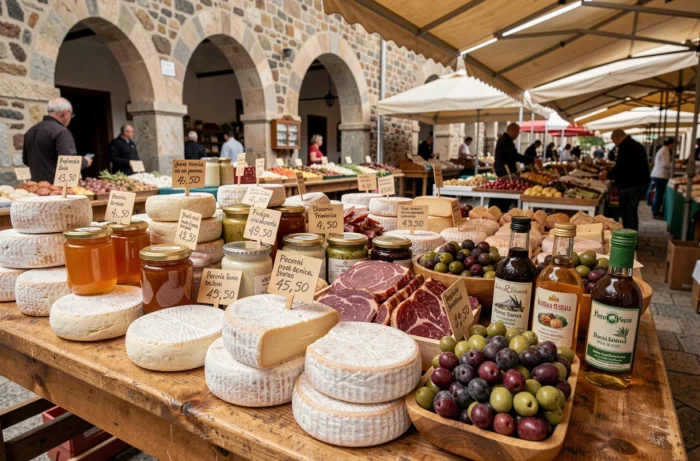
Here’s what you can actually find at the stalls:
- Locally aged sheep cheeses, sold by the producers themselves, with varying aging stages depending on the season of purchase.
- Sardinian cured meats (salsiccia sarda, guanciale) from farms in the province of Sassari, often without labels but traceable through direct contact with the producer.
- Fresh seafood, the supply of which depends on the local fishing supply chain supported by a dedicated municipal program: Porto Torres has launched a call for tenders for the support and governance of the fishing sector.
- Handcrafted ceramics and textiles that feature traditional Sardinian patterns, sold by artisans registered under the CCNs.

The presence of artisans varies according to the CCN calendar and the season, making visits more or less rich from month to month. Some producers only come during the high tourist season, while others maintain their stalls year-round.
Practical constraints and limits of the artisan market in Porto Torres
The riposo sardo dictates opening hours. Like everywhere in northern Sardinia, most shops and stalls close in the early afternoon. Morning markets generally end before the break, and events on the lungomare only start in the late afternoon.
The regulatory framework for commerce in public areas has recently evolved in Italy, with new national guidelines on public space sales concessions. These changes may affect the renewal of permits for artisans occupying fixed spots at markets.
Porto Torres is also a city marked by the industrial crisis of its petrochemical hub, classified as crisi industriale complessa by the Italian Ministry of Enterprises. This economic situation weighs on the local commercial fabric: artisan markets function both as a lever for economic conversion and as a tourist attraction.
The model of natural shopping centers attempts to compensate for this fragility by uniting artisans, merchants, and the community around a structured offering. The increasing number of mixed events on the lungomare confirms that the municipality is actively investing in artisan commerce, with two active CCNs and an expanded summer calendar each year.