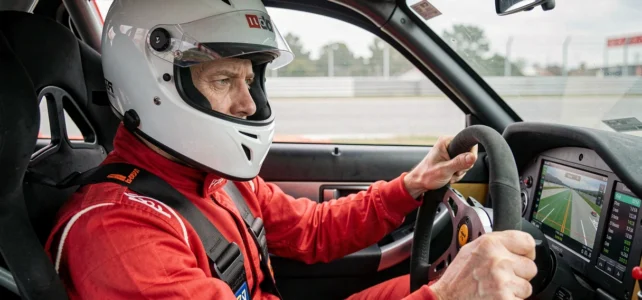
On the track, the first thing that strikes you is not the speed, but the briefing. Even before touching a steering wheel, you spend time standing in front of a whiteboard dissecting trajectories, braking points, and acceleration zones.
A driving course is not just a few laps: it is a training session supervised by qualified instructors, with precise instructions that change the way you approach driving. The cost of this experience varies according to very concrete parameters that we will detail.
What the choice of vehicle really changes on the bill
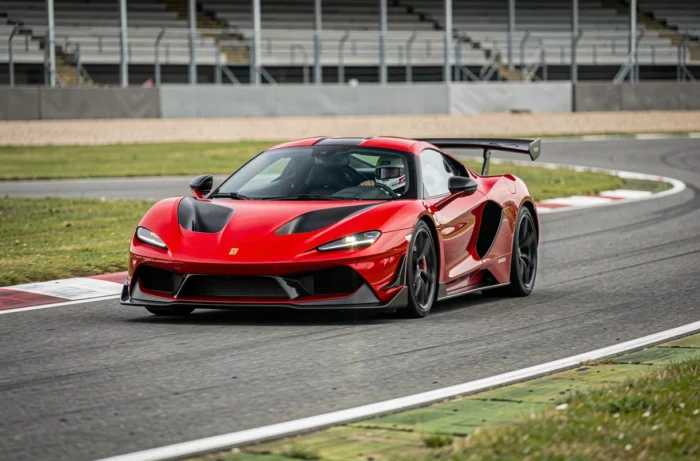
One might think that the circuit or the duration weighs the most in the price. In practice, it is the model of the car that tips the estimate. A session behind the wheel of an accessible sports car (like a Porsche Cayman or Ford Mustang) remains in a significantly lower range than driving a Ferrari 488 or a Lamborghini Huracán.
The reason is both mechanical and financial: the tires of a supercar cost several times more than those of a classic GT, brake pads wear out faster, and even minor body repairs can be quite expensive. Organizers pass these operating costs directly onto the price of the course.
To accurately assess the budget and benefits of a speedetliberte.fr course, it is advisable to first compare the categories of vehicles before looking at the number of laps or video options.
Specifically, here are the main categories found among most providers:
- Sport GTs (Porsche, Alpine, Corvette): the best balance between sensations and price, with already very engaged driving in corners
- Supercars (Ferrari, Lamborghini, McLaren): a step up in power and price, with a more demanding chassis behavior
- Single-seaters like Formula Renault or Formula 4: a radically different experience from a closed car, with aerodynamic downforce that changes everything in a curve
- Rally stages on dirt or ice: often an intermediate budget, but a driving technique in oversteer that attracts a specific audience
Number of laps and actual driving time on the track
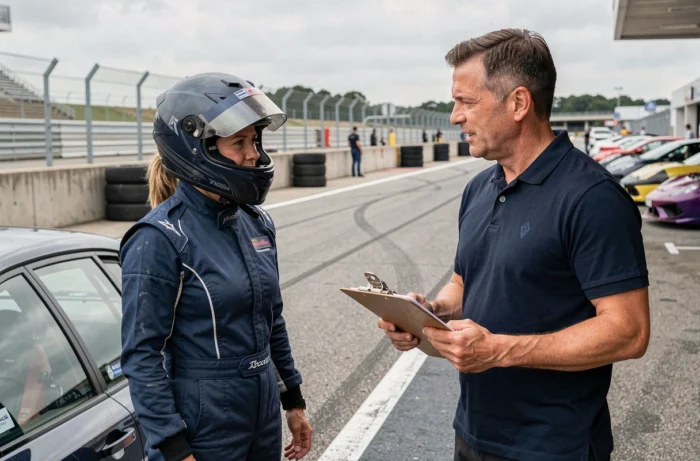
A point that regularly generates frustration among participants: the announced duration does not always correspond to the time spent behind the wheel. A course presented as a half-day includes the briefing, equipment, rotations between participants, and sometimes a discovery lap as a passenger. The actual driving time may be limited to just a few laps.
The length of the circuit also comes into play. A lap on a short track can be completed in less than a minute, whereas a circuit several kilometers long offers more driving time per session. You cannot compare a session at Le Mans with one on an extended go-kart track.
Tips to increase time behind the wheel
Favor formulas that announce a number of laps rather than an overall duration. Some organizers offer additional laps individually, allowing you to adjust the budget according to your desires once on site.
Small group courses mechanically offer more driving time per person. A session limited to four or five participants reduces waiting times between each session, unlike open days that sometimes host several dozen drivers.
Driving course for young drivers: what the RIPOST law changes
Since the RIPOST law, a driver with a probationary license can no longer drive a vehicle exceeding a certain power threshold on open roads, whether it is their own car or a rented vehicle. This restriction creates a paradoxical situation for the youngest car enthusiasts.
On a closed circuit, the limitation does not apply. A young driver with a probationary license can legally take the wheel of a supercar as part of a supervised course. The circuit remains the only legal avenue to experience driving a powerful vehicle before the end of the probationary period.
For this group of drivers, the driving course goes beyond mere leisure. It is practical training in managing power, hard braking, and control in limit situations, skills that the standard license does not cover.
Concrete benefits beyond the thrill
We often talk about adrenaline and memorable experiences. Feedback from regular participants points to more tangible gains, less spectacular but more lasting.
The learning of distant vision transforms everyday driving. On the track, the instructor constantly repeats to look towards the exit of the turn, not at the pavement in front of the hood. This reflex, once integrated, improves anticipation on the road and reduces sudden braking.
Managing braking is another direct gain. Braking hard and late, gradually releasing, modulating pressure in a curve: these techniques apply on the road when avoiding an obstacle or stopping on wet pavement.
- Looking far ahead: better anticipation of dangers and smoother driving
- Progressive braking technique: shorter stopping distances in emergency situations
- Understanding mass transfer: increased stability in corners, even in a passenger vehicle
A gift format that works
The driving course remains one of the most popular gift packages in France for car enthusiasts. Entry-level formulas allow discovering the circuit without a heavy financial commitment, and most beneficiaries extend the experience by booking a second course themselves.
Giving a course is offering a disguised learning experience as a gift. The recipient leaves with sensations, but also with safer driving reflexes, which justifies the investment beyond mere entertainment.
The cost of a driving course primarily depends on the chosen vehicle and the actual time spent behind the wheel. Enthusiasts who approach this expense as training rather than a one-off leisure activity gain concrete and measurable benefits in their daily driving.