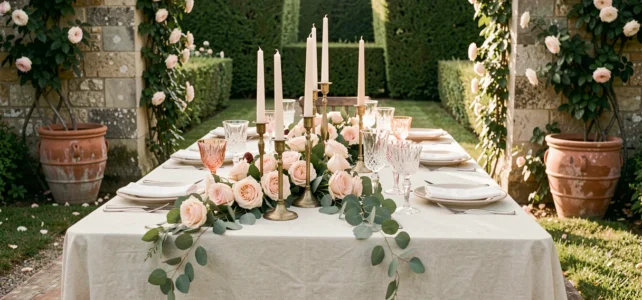
A romantic wedding decoration relies on a balance between materials, light, and color palette. Every visual choice, from the tablecloth fabric to the type of candle placed on the table, influences the atmosphere of the reception. Understanding the mechanisms of this balance allows for the creation of a coherent decor, suited to the venue and budget, rather than piling decorative elements without a guiding thread.
Color palette of a romantic wedding: going beyond powder pink
The most common reflex associates romantic decoration with pink tones. This base works, but it confines the scenography to a single register. The romantic palette extends far beyond.
Pastel colors (sky blue, sage green, peach) create a soft atmosphere without falling into monotony. Since the summer of 2026, butter yellow has emerged as a bright alternative in Francophone weddings. Paired with ivory tablecloths and cream flowers, it brings a warmth that pink alone does not produce.
At the opposite end of the spectrum, some couples choose deeper shades (burgundy, plum, terracotta) to evoke passion rather than tenderness. Both registers are romantic, but they tell different stories. Choosing between pastel softness and passionate intensity is the first structuring decision of any romantic wedding decoration.
To explore color combinations and elements suitable for each register, romantic wedding decor on Mariage et Vous details several associations tested by recent couples.
Materials and textures serving the romantic ambiance
The palette alone is not enough. It is the materials that give depth to the decoration and physically translate romance.
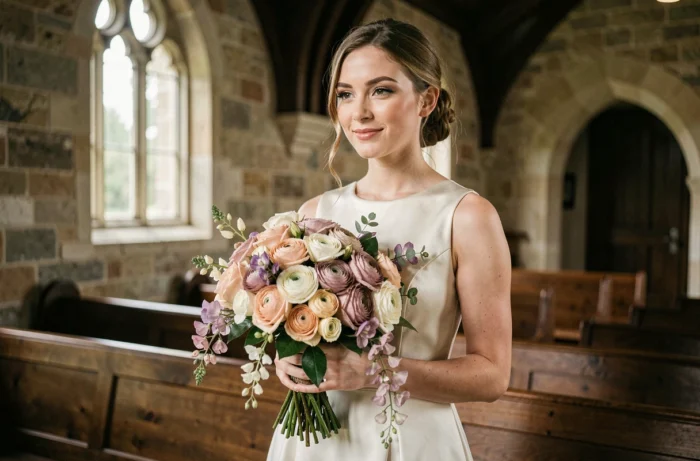
Lace remains a classic of romantic weddings: table runners, dressing for illuminated jars, details on invitations. Its transparency creates a natural play of light that softens any surface.
Wrinkled linen, cotton voile, and tulle provide complementary textures. The goal is to layer several materials rather than relying solely on one fabric. A centerpiece placed on a linen runner, surrounded by candles in blown glass holders and small bouquets tied with silk ribbon, creates a discreet visual richness.
- Linen and washed cotton are suitable for outdoor weddings or in a rural setting, as they tolerate wrinkles and wind without losing their shape.
- Velvet and satin work better in enclosed venues (castle, vaulted hall) where artificial light enhances their shine.
- Lace serves as a binding element between these materials: it lightens a too-dense velvet or adds character to a too-raw linen.
The choice of materials directly depends on the reception venue. Placing satin on a rustic wooden farm table creates a dissonance. Matching the texture to the setting avoids mismatches that break the ambiance.
Targeted floral decoration: strong pieces rather than profusion
Flowers often represent the most expensive item in a wedding scenography. The recent trend favors targeted compositions rather than floral omnipresence on every surface.
Specifically, concentrating the floral budget on two or three impact points (ceremony arch, main centerpiece, entrance to the hall) creates a more striking effect than spreading small identical bouquets everywhere. A generously flowered ceremony arch anchors the visual memory of the day, while the tables can suffice with a few stems in bud vases.
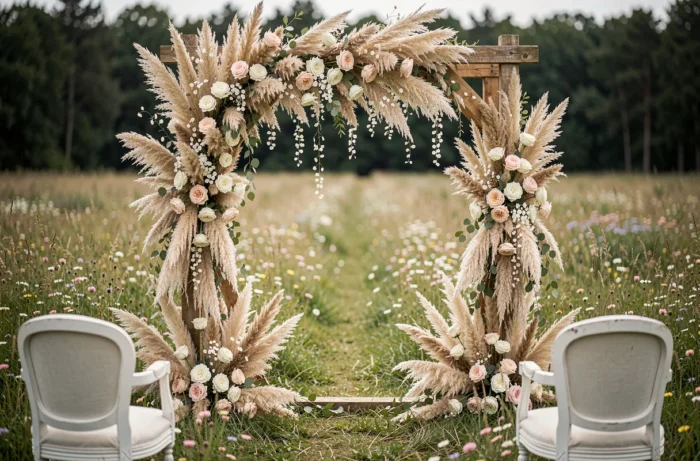
Roses, peonies, and ranunculus remain the safe bets for a romantic wedding. For those seeking a twist, adding foliage (eucalyptus, olive) or grasses like pampas grass adds volume without blowing the budget. Dried flowers, which can be kept after the reception, are also gaining ground.
A common pitfall: choosing flowers solely for their appearance without checking their durability based on the season and temperature of the venue. Peonies in the middle of summer in a non-air-conditioned room wilt within hours. Checking the resilience of each variety with the florist is part of the technical preparation, not just the aesthetic.
Lighting and vintage objects: creating a romantic atmosphere in the evening
Light radically transforms a decor once the sun sets. String lights, candles (pillar, tealight, candelabra), and lanterns form the basic trio of romantic lighting.
Intensity matters as much as the type of source. Too bright lighting breaks intimacy, while too dim lighting makes the room uncomfortable for dining. Alternating well-lit areas (buffet, head table) and dimmed areas (dance floor, lounge corner) creates a luminous path that naturally guides guests.
The vintage decor trend enriches this ambiance: patinaed candelabra, antique frames, and mismatched tableware serve as centerpieces with a stronger identity than new and standardized elements. These vintage objects tell a story, which aligns perfectly with the spirit of a romantic wedding. Renting vintage pieces from specialized decorators allows for budget control while achieving a unique result.
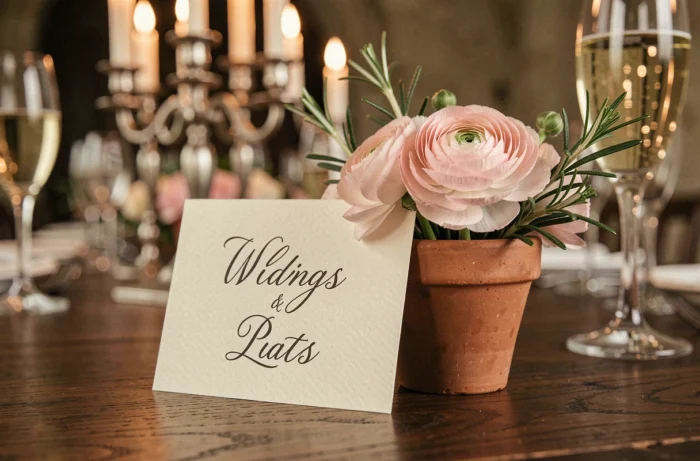
The final decision concerns the style of the ceremony itself. A romantic decor gains coherence when every detail, from the calligraphed menu to the seating plan on an antique mirror, participates in the same visual register. A clear guiding thread is better than ten brilliant ideas with no connection. It is this coherence, more than the budget, that makes a wedding decoration unforgettable.