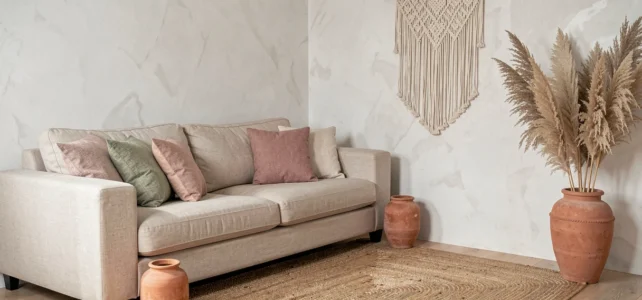
A repositioned sofa, a replaced light fixture, a shade applied to a wall: these simple gestures radically change the perception of a room. Transforming your interior with trendy decor doesn’t require a big budget or heavy intervention, as long as you target the right levers. Here are the concrete strategies that truly change the atmosphere of a living space.
Lighting as the first lever of decor transformation
Have you ever noticed that a room looks smaller and colder under a single white ceiling light? The problem rarely lies with the furniture or colors. Lighting is the primary factor that alters the ambiance of an interior.
Current trends favor warm color temperatures, between 2700 and 3000 K. This range creates a golden light, similar to that of the end of the day, which relaxes and highlights natural materials like wood or linen.
Multiply light sources instead of relying on a single central point. A table lamp near the sofa, LED lighting under a shelf, a sculptural pendant above the table: each source divides the room into zones and adds depth. Sculptural lamps, by the way, are among the strong markers of interior design right now. They function as decorative objects even when turned off.
Dimmable lighting (dimmer switch) allows you to adapt the atmosphere according to the moment. Bright kitchen in the morning, subdued living room in the evening: a dimmer transforms a single room into two distinct spaces. Connected LED systems also allow you to program personalized lighting scenarios without electrical work.
If you’re looking for decor tips on Mon Blog Déco, you’ll find additional ideas for combining lighting and ambiance in every room of the house.
Raw materials and connected objects: the trendy decor duo
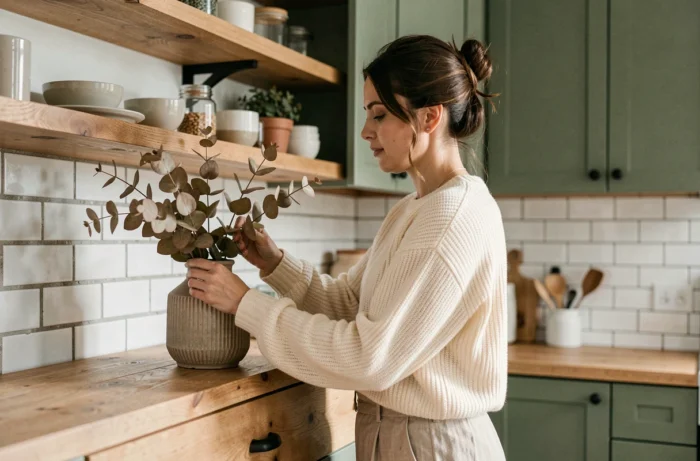
Recycled wood, natural stone, rattan, linen, cork, terracotta: these materials are no longer reserved for country interiors. They now form the pillars of interior decoration, driven by a search for authenticity and a more pronounced ecological awareness.
A raw wood tray placed on a black metal table. A natural stone wall illuminated by a discreet LED wall lamp. The combination of organic materials and technology creates a very contemporary visual contrast. This warmth-functionality duo is rarely exploited in classic decor advice articles, even though it represents one of the most striking axes of the 2025-2026 trends.
Which materials to prioritize according to the room
- Linen and thick cotton for living room textiles (cushions, curtains, throw) : they add texture without weighing down the space
- Terracotta and clay for the kitchen or entryway, in the form of vases, pots, or tiles, which age well and gain character
- Cork for an office or bedroom, as wall panels or accessories, which absorbs sound and adds a warm touch
- Rattan for small accent furniture (coffee table, armchair) in the living room or on a covered balcony
The idea is not to change everything. One or two elements in raw material are enough to anchor the style of a room. A wicker basket, a turned wood lamp, a stone tray: these occasional additions cost little and change a lot.
Colors and contrasts: going beyond all-white without risk
An all-white wall is reassuring, but it flattens volumes. Why not concentrate color on a single wall? This accent wall technique structures the room, creates a focal point, and directs the gaze toward the area you want to highlight (headboard, dining corner, bookshelf).
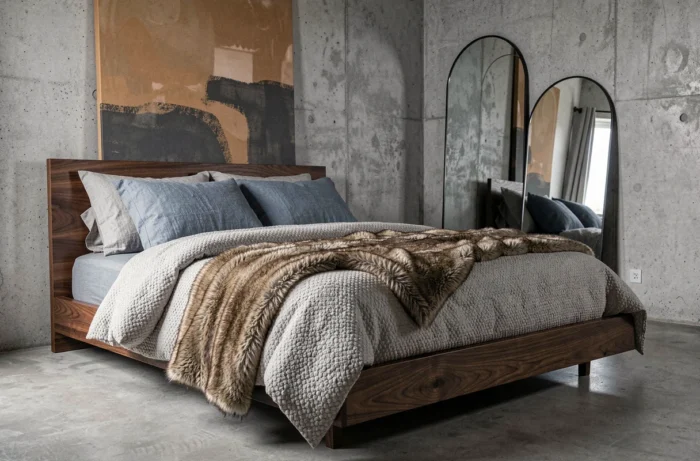
Current trendy palettes rely on earthy tones (ochre, terracotta, sage green, warm brown) that easily blend with existing furniture. A sage green on a living room wall warms the space without darkening it.
Working with contrast without overloading
Contrast doesn’t only come from paint. A light fabric sofa placed in front of a dark wall produces the same depth effect. Cushions in complementary shades (terracotta on gray, mustard on navy blue) add relief without touching the walls.
Keep a simple rule: three colors maximum per room, including one neutral dominant. This leaves room for materials and objects to exist visually. Too many competing shades tire the eye and make the room difficult to evolve.
Rethinking circulation in your living space
A cluttered living room feels small even if it has a generous surface area. The arrangement of furniture influences the feeling of space as much as their size. Shifting a sofa a few centimeters from the wall, orienting seats toward the center of the room rather than along the walls: these adjustments free up circulation lines and create a sense of openness.
In a kitchen, clearing the countertop of any unused items changes the perception of available volume. Store appliances in a cabinet, keeping only the decorative or functional elements you use every day on the surface.
An airy interior highlights each decorative object more. It’s a simple principle, but often overlooked: before adding, subtract. Remove an unnecessary accent piece, free up a corner, let a wall breathe. Empty space contributes fully to decoration.
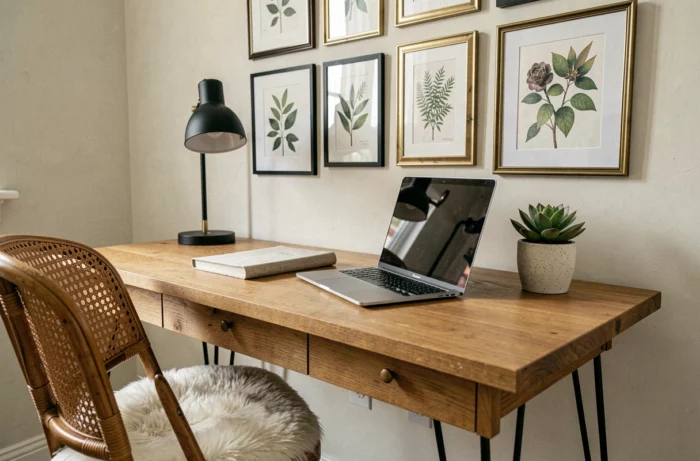
Raw materials, well-thought-out lighting, and a few targeted color choices are enough to refresh an interior without upheaval. The most effective approach is to start with a single visible change (a light fixture, a wall, a textile) and observe the effect before going further. The most successful trendy decor is built in successive touches, not all at once.