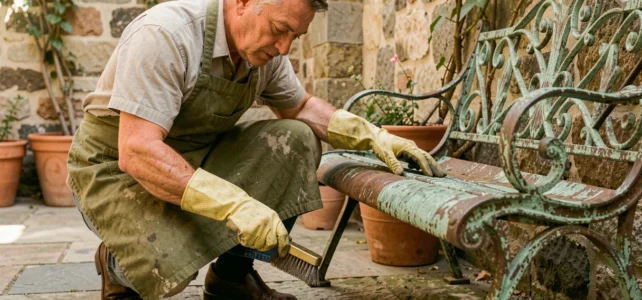
This greenish layer that covers a copper candlestick or a brass doorknob is called verdigris. It results from a chemical reaction between the metal and ambient moisture, combined with the oxygen and carbon dioxide in the air. This phenomenon affects copper, bronze, and brass, sometimes within just a few weeks in a humid environment.
Before scrubbing with the first product that comes to hand, it’s worth understanding what really works and what might damage the surface.
Why vinegar and lemon are not always enough on copper
Most guides recommend a bath of white vinegar or scrubbing with lemon and salt. These acids do indeed dissolve the verdigris on the surface. The problem arises afterward: if the metal is not rinsed thoroughly and then dried immediately, the residual acid accelerates new oxidation.
On brass or bronze, soaking too long in vinegar can dull the surface irreversibly. Specialized resources on metal maintenance remind us that it is essential to neutralize the acid after cleaning with a thorough rinse in clear water, followed by complete drying with a soft cloth. Without this step, the verdigris often returns faster than before.
Have you ever noticed that an object cleaned with vinegar turns green again in just a few days? This is precisely the mechanism at work. The acid has stripped away the natural protective layer of the metal, and moisture seeps in. To remove verdigris from metal without triggering this vicious circle, acidic cleaning must always be followed by a protection step.
Baking soda and gentle cleaning: the underestimated method
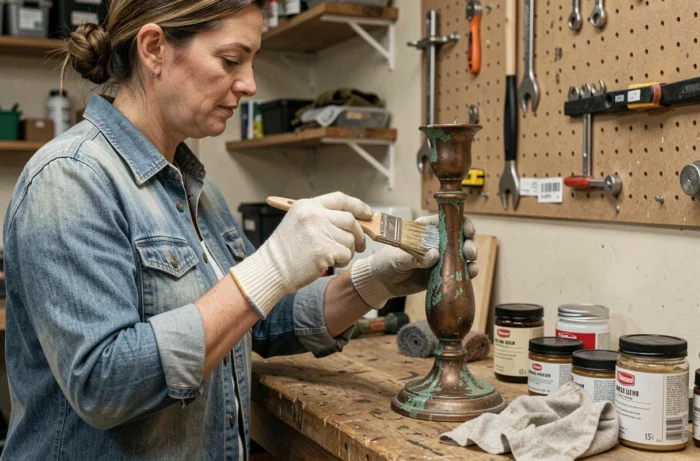
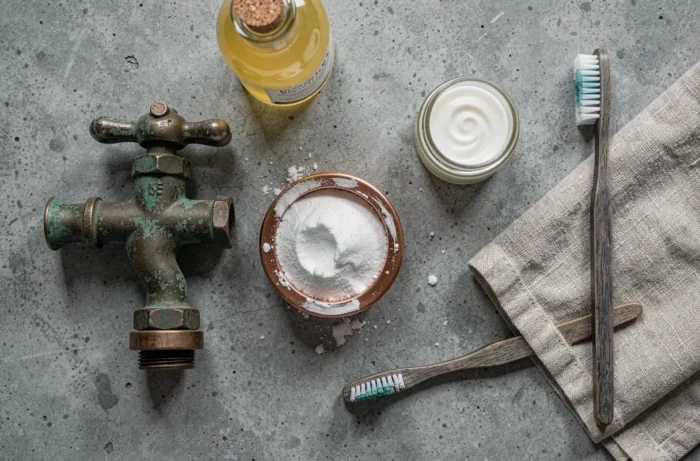
Baking soda is slightly abrasive and basic, making it an interesting complement to acidic solutions. Sprinkled on a damp sponge, it removes verdigris deposits without attacking the metal deeply. This is a gentler approach than pure vinegar, particularly suitable for fragile objects or antique pieces.
Here’s how to proceed for effective cleaning with baking soda:
- Lightly moisten the object, then apply a thick paste of baking soda mixed with a few drops of water on the affected areas.
- Scrub with a soft-bristled brush or a microfiber cloth in circular motions, without pressing too hard on engravings or reliefs.
- Rinse thoroughly with clear water and dry immediately with a clean, dry cloth to avoid any residual moisture marks.
Baking soda does not corrode the surface like an acid, making it safer for regular use. On light oxidation, it is often sufficient on its own. For thick and old verdigris, it can be combined with an initial pass with lemon, then used as a finishing step to neutralize any remaining acidity.
Verdigris and food use: a real risk not to be ignored
Verdigris is not just an aesthetic problem. This compound is toxic and irritating to the skin and mucous membranes. Copper jam pans or old pots showing green traces should never be used as they are for cooking.
Specialized sources published in the summer of 2026 clearly remind us that oxidized utensils must either be completely deoxidized and then re-tinned by a professional, or removed from any culinary use, even if the green layer appears thin. A copper pot with verdigris is not a charming vintage item in the kitchen; it is a danger.
For cleaning these pieces, wear rubber gloves and work in a ventilated space. Avoid touching the residues with bare hands, as prolonged contact can cause skin irritations.
Durable metal protection: varnish, wax, or maintenance cream
Cleaning verdigris without subsequently protecting the metal means repeating the work every month. The real solution comes after cleaning. Several options allow for creating a barrier between the metal and humid air.
- Clear varnishes for metals form a waterproof film that blocks oxygen and moisture for several weeks, even months depending on exposure. They are suitable for decorative objects that are handled infrequently.
- Professional neutral pH waxes offer more flexible protection. They are easily renewed and allow the metal to breathe while significantly slowing down oxidation.
- Specific copper, brass, or bronze maintenance creams combine a slight cleaning power with a protective agent. They are ideal for regular maintenance without stripping.
Durable protection relies on stable barriers, not repeated acidic baths. A common mistake is to multiply cleanings with vinegar or lemon without ever applying a protective layer. Each acidic stripping weakens the metal’s surface and makes it more vulnerable to subsequent oxidation.
Adapting protection to the type of metal and its location
An outdoor copper object (gutter, sign, garden decoration) requires a weather-resistant varnish. A brass candlestick placed in a living room will suffice with a thin layer of wax renewed two or three times a year.
Humidity is the main triggering factor for verdigris. Storing bronze or copper objects in a dry place, away from condensation, remains the simplest and most effective precaution. A dehumidifier in a storage room can make a noticeable difference over the long term.
Cleaning verdigris is not complicated in itself. The difficulty lies in what comes after: protecting the metal so that the work does not have to be redone the following month. A good reflex is to always finish with the application of a suitable wax or varnish, even on an object that seems perfectly clean. It is this last step that transforms a one-time cleaning into sustainable maintenance.